Finding the Right Fit for your operations
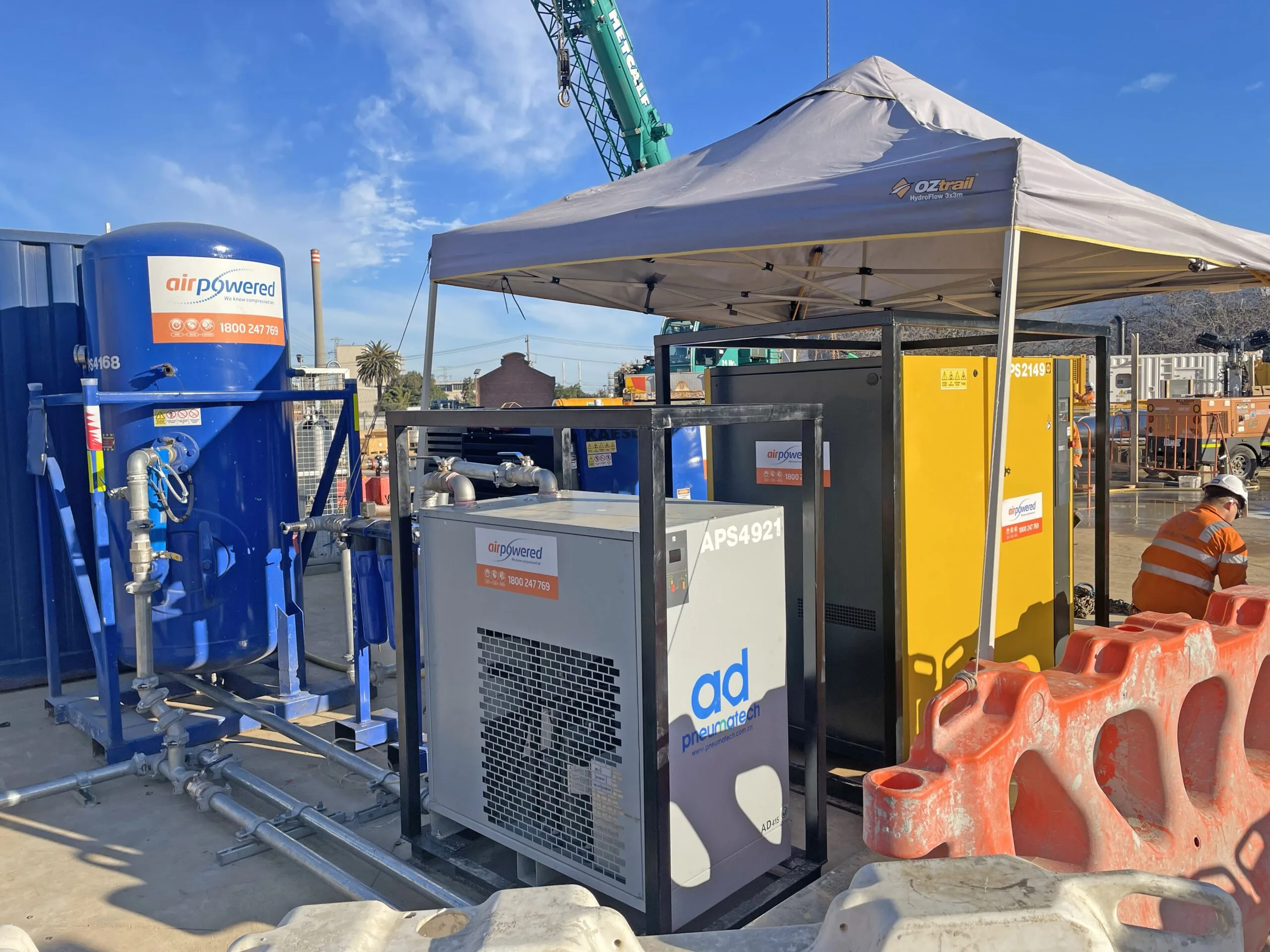
Not every job needs a permanent setup. And not every temporary fix should be treated like a stopgap. For businesses that rely on compressed air, whether in construction, manufacturing, mining, or government projects, the decision of whether to hire or invest isn’t just about cost. It’s about flexibility, risk management, and ensuring you’ve got the right solution for the job at hand.
Here’s how to make smarter decisions about temporary versus permanent compressed air solutions.
When to Hire vs When to Invest
The hire vs buy decision is rarely straightforward and can have major operational and financial impacts.
When hiring makes sense:
- Short-term projects or contracts with a defined end date.
- Testing new capacity before committing to a permanent purchase.
- When uptime is critical and you want backup equipment on hand.
- To avoid tying up capital in an asset that will sit idle outside peak demand.
When investing is smarter:
- For long-term, continuous operations with predictable demand.
- When the system will form part of your permanent infrastructure.
- If you require highly customised setups that are impractical to hire.
- To reduce ongoing hire costs when compressed air is a core utility.
The most efficient operations often do both, combining a permanent baseline with flexible hire equipment to scale up or cover gaps.
How Temporary Setups Support Seasonal Demand, Shutdowns, and Remote Work
Temporary compressed air isn’t just for emergencies. It’s a strategic tool that can help businesses manage peaks, downtime, and mobility.
- Seasonal demand: many industries, like concrete batching, agriculture, and construction, face fluctuating workloads. Hiring additional compressors during busy periods helps meet demand without carrying excess capacity all year.
- Planned shutdowns and maintenance: a hire compressor keeps air flowing while your permanent system is offline. This minimises downtime and ensures essential equipment stays powered during servicing.
- Remote and mobile operations: from remote mine sites to temporary worksites, transporting and installing a hire unit is often more efficient than moving permanent infrastructure.
Bottom line: the goal is continuity. Keeping tools powered, production moving, and operations running smoothly.
The Risk of Under-Specifying
The biggest mistake businesses make with temporary compressed air is thinking of it as a “good enough” fix. The wrong hire choice causes more problems than it solves.
- Undersized equipment: too small a unit means pressure drops, overheated compressors, and unhappy operators.
- Overworking hire units: running a temporary compressor beyond its rated duty cycle can lead to failures and costly downtime.
- Inadequate accessories: dryers, filters, and hose layouts are often overlooked, but poor air quality or inefficient distribution will affect tools and processes.
The fix? Always spec temporary equipment like it’s your own. Work with a supplier that understands your industry, demand profile, and environment. That will ensure your setup supports your operations, rather than hinders them.
What a Flexible Compressed Air Strategy Looks Like
In practice, most businesses find a hybrid model works best:
- Permanent system sized for average load.
- Hire equipment covering peaks, maintenance, and emergencies.
- Supplier partnerships providing sales, hire, and service support.
Flexibility reduces capital strain, safeguards uptime, and ensures compressed air is always available when needed.
Let the Job Define the Setup
The right compressed air solution is the one that keeps your site moving. Temporary doesn’t always mean short-term. Permanent doesn’t always mean best value. The smartest compressed air strategies combine both, giving you a solid foundation with the flexibility to scale, adapt, and stay productive.
Not Sure Whether to Hire or Invest?
Talk to the team at Air Powered Services to find the right compressed air solution for your operation – built for performance, flexibility, and uptime.
We’ll Keep You Running On Air