
Cold weather can place extra strain on compressed air systems, impacting performance, reliability and efficiency. From moisture build-up to oil thickening and frozen condensate lines, winter conditions can create costly downtime if your equipment is not properly prepared.
At Air Powered Services, we understand the challenges harsh conditions can place on compressed air equipment. This guide covers the key considerations for operating air compressors in cold weather and how to keep your system running reliably year-round.
How Cold Weather Affects Air Compressors
Low temperatures can affect multiple parts of a compressed air system, including:
- Compressor oil and lubricants
- Moisture management systems
- Condensate drains and pipework
- Batteries and diesel engines
- Air dryers and filters
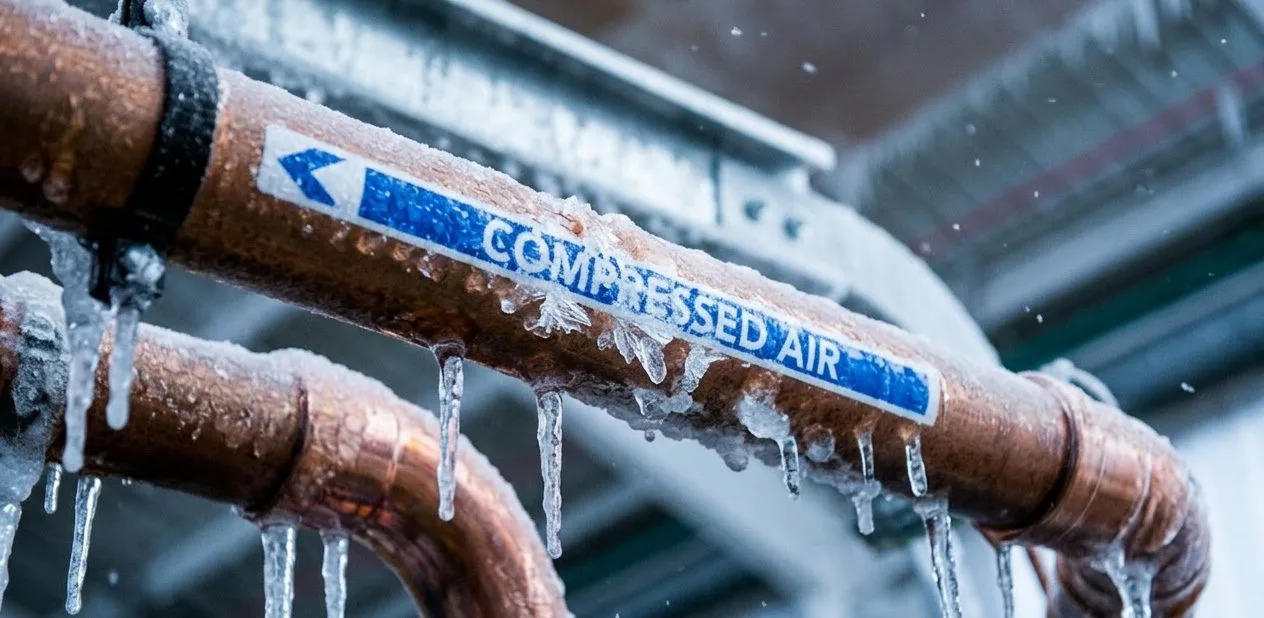
Without proper preparation, cold weather can reduce efficiency, increase wear, and lead to unexpected breakdowns.
Common Cold Weather Problems
Thickened Compressor Oil
As temperatures drop, compressor oil becomes thicker and more viscous. This makes it harder for the compressor to circulate lubricant during start-up, increasing wear on internal components and placing additional load on the motor or engine.
Using the correct oil grade is essential to maintain reliable lubrication and system protection.
Moisture and Frozen Condensate
Compressed air naturally contains moisture. In cold environments, this moisture can freeze inside drains, pipework and valves, causing blockages and pressure issues.
Frozen condensate can also damage components and reduce system efficiency if not managed correctly.
Increased Moisture Formation
Cold air holds less moisture than warm air, but as compressed air cools after compression, condensation forms more rapidly. Without effective drying and filtration, excess moisture can enter downstream equipment and processes.
Hard Starting in Diesel Compressors
Portable diesel compressors can experience difficult starts in low temperatures due to:
- Reduced battery performance
- Thickened engine oil
- Fuel gelling in extreme cold
Routine maintenance and correct winter operating procedures help minimise these issues.
Preparing Your Compressor for Cold Weather
1. Inspect and Maintain Drains
Condensate drains should be checked regularly during colder months to ensure they are clear and functioning correctly. Automatic drains and condensate lines are especially vulnerable to freezing.
Insulating exposed pipework can help prevent frozen condensate issues.
2. Keep the Compressor Room Warm and Ventilated
Maintaining a stable ambient temperature around your compressor improves reliability and protects system components.
Good ventilation remains important, even in winter, to prevent overheating and condensation build-up inside the compressor room.
3. Service Air Dryers and Filters
Air dryers and filters play a critical role in removing moisture from compressed air systems. Regular servicing ensures they continue operating effectively during colder conditions.
Blocked or saturated filters can reduce airflow and increase pressure drop across the system.
4. Check Batteries and Electrical Components
Cold temperatures reduce battery performance and can impact electrical systems. Inspect batteries, cables and connections before winter to avoid unexpected failures.
For diesel-powered compressors, ensure fuel systems are maintained and suitable for colder operating conditions.
Energy Efficiency During Winter
Compressed air systems often work harder during winter due to increased moisture management and longer warm-up times. Improving system efficiency can help offset these additional operating demands.
Key ways to improve efficiency include:
- Fixing air leaks
- Maintaining proper pressure settings
- Servicing filters and dryers
- Using variable speed compressors where appropriate
- Scheduling regular preventive maintenance
Modern variable speed rotary screw compressors, such as the ALUP range, can automatically adjust output to match demand, helping reduce unnecessary energy consumption year-round.
Why Preventive Maintenance Matters
Cold weather can quickly expose existing weaknesses in a compressed air system. Preventive maintenance helps identify issues before they lead to downtime, including:
- Worn seals and hoses
- Moisture build-up
- Oil contamination
- Failing drains or filters
- Electrical and battery issues
Routine inspections ensure your system remains reliable, efficient and ready for changing conditions.
Conclusion
Operating air compressors in cold weather requires the right preparation, maintenance and system setup. From selecting the correct oil to managing moisture and servicing critical components, taking proactive steps can protect your equipment and minimise costly downtime.
At Air Powered Services, we provides expert advice, servicing and support to keep your compressed air system performing reliably in all conditions.
Need Help Preparing Your Compressor for Winter?
Whether you operate a workshop compressor or a fleet of portable diesel compressors, our compressed air specialists can help you prepare for colder conditions with expert servicing, maintenance and tailored system advice.
Contact Air Powered Services today to keep your compressed air system running efficiently all year round.